Classic Influencers: The Authors Who Influenced The Author
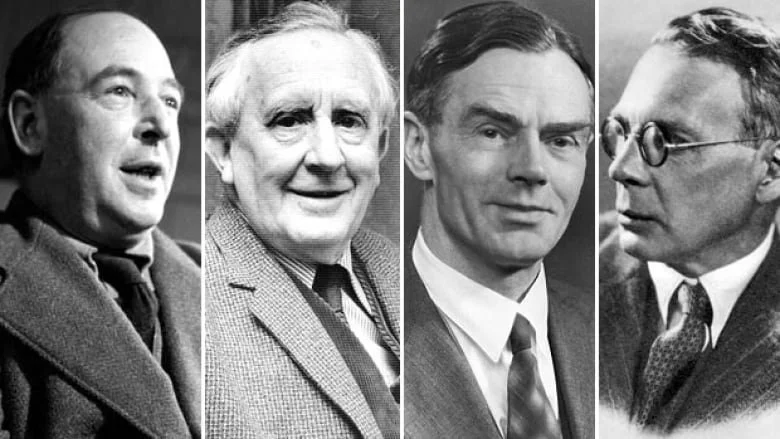
The Inklings.
From Left to Right: C.S. Lewis, J.R.R. Tolkien, Owen Barfield, & Charles Williams
There are many books I have not read in their entirety: The Hobbit, The Two Towers, Return of the King, or even Worlds Apart (which is, honestly, on my To Read list). I do not feel guilty for not having completed (or even started) these books. I have a reading disability that causes words on a page to parkour their way all about my field of vision which, honestly, makes for slow reading and migraines.
That said, I have read Fellowship of the Ring by J.R.R. Tolkien, and that actually gave me what I needed: permission.
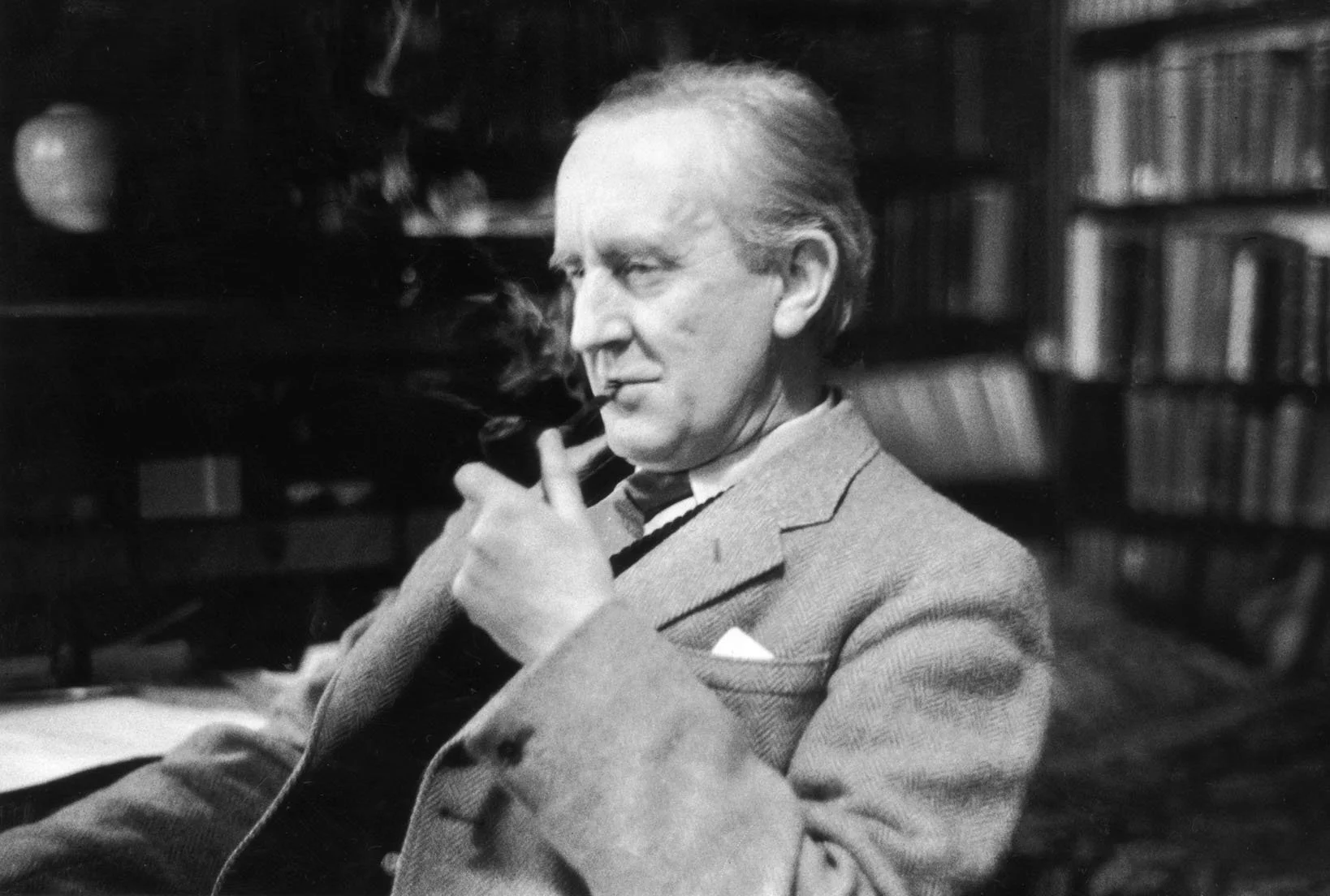
J.R.R. Tolkien
Worldbuilder Extraordinaire.
What Tolkien could not give me was people.
His characters are archetypes, and archetypes serve their purpose. But I wanted deeper. I wanted relatable. I wanted true dumpster fires and living disasters: characters who contradict themselves, who
love people they should not, who carry the specific, unglamorous weight of real psychological complexity. I wanted an ensemble where no single character carries the moral authority of the narrative, because in my experience, no single person ever does.
That is where Robert Jordan came in.
Fourteen books. I am currently on Book 13, Towers of Midnight — written by Brandon Sanderson, finishing the series after Jordan’s death at Harriet McDougal’s request. I will make it to Bookhalla, even if I listen to Kate Reading and Michael Kramer read it to me while I drive, so I don’t get migraines. Audiobooks are real books.
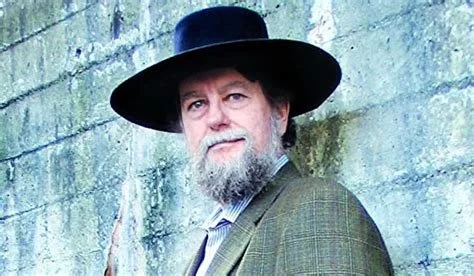
Robert Jordan
Designer of People as Characters.
The Wheel of Time is, among other things, a masterclass in what an ensemble cast actually demands of a writer: that you hold dozens of fully realised people in your head simultaneously, that you honour the interiority of each one, that you resist the pull to let the plot flatten them into functions. Jordan wrote women, in particular, with a specificity and a stubbornness that I found remarkable. They were not there to serve the story. They were the story, alongside everyone else. That is the thing I carried out of those books and directly into The Hearthlight Cycle.
As I wrote the earlier post this week about Riordan Veilwalker, I realised that Aestraea has more named primary male characters than female ones in A World Reborn, which surprised me when I realised it. That is not an accident, and it is not a statement. It is just what the world produced when I stopped trying to manage it and let it be what it was. Jordan taught me to trust that.
Then there is Robert Asprin.
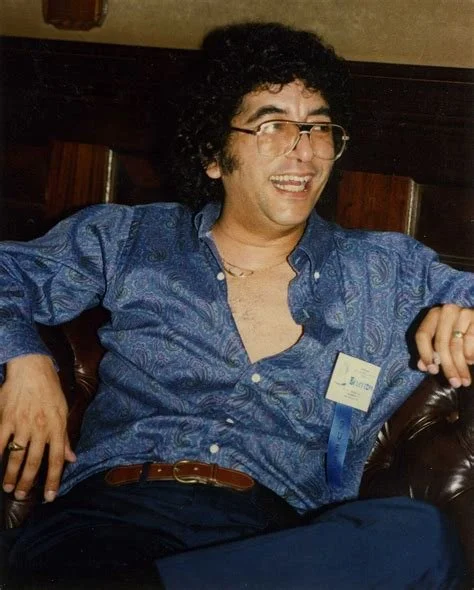
Robert Asprin
His books are never a M.Y.T.H.-take.
If you know the M.Y.T.H. series, you are already smiling. If you do not, the short version is this: they are funny, they are light, they are what some people call popcorn novels, and I read them with great and unashamed enjoyment. The migraines were worth it. These are also now on your To Read list. I don’t make the rules.
Asprin taught me something that neither Tolkien nor Jordan could, because neither of them particularly needed to: that conflict does not have to be existential to be real. No looming darkness. No ancient evil stirring in the deep. A misunderstanding between two people, played out across a hundred and fifty pages, is enough. The stakes can be entirely human and entirely ordinary and still hold a reader completely.
That matters more than it sounds. Epic fantasy has a tendency to reach for the apocalyptic, as if smaller conflicts are beneath the genre’s dignity. Asprin reminded me that they are not. Some of the best scenes in A World Reborn are arguments. People talking past each other, protecting themselves with humour, saying the wrong thing, and spending chapters untangling it. That is Asprin’s influence, sitting quietly inside an epic fantasy series, not announcing itself.
Three writers. Thirteen books from one, one from another, and a stack of paperbacks from a third. What I took from each of them is not style, not voice, not even structure. It is permission, of a different kind each time: to go deep, to go wide, to let the small and human stand next to the enormous and ancient without apology.
The Hearthlight Cycle is what happened when I took all three permissions and wrote the world that had been living in me since long before I knew it even existed.
The Kickstarter for A World Reborn is almost over! It is live until June 30! Pledge your support, and help fund an epic world!
This article first appeared on Substack on June 26, 2026.